
The common fig tree, botanically known as Ficus carica, is one of the oldest cultivated fruit plants in the world. It originates from warmer parts of the Mediterranean region and western Asia, but carefully selected cultivars can also be grown successfully in cooler European climates. In warm, sheltered areas, a fig tree can be planted directly in the garden. In colder regions, container cultivation makes it easier to protect the roots and branches during winter.
Ficus carica is valued for its sweet fruit and distinctive tropical appearance. Its large, deeply lobed leaves create a dense green canopy during summer, making the plant an attractive feature for a sunny patio, courtyard or garden border. With enough heat, light and a long growing season, some fig cultivars can produce two crops in one year.
Successful fig tree care depends on a warm position, well-drained soil, balanced watering and suitable winter protection. Pruning must also be approached carefully. Excessive cutting can remove older wood that might have carried an early crop, while a completely unpruned tree can become crowded and difficult to manage.

What Is Ficus carica?
Ficus carica is a deciduous shrub or small tree belonging to the mulberry family. In ideal conditions, it may grow several meters tall. Its size can be controlled through pruning, training and container cultivation.
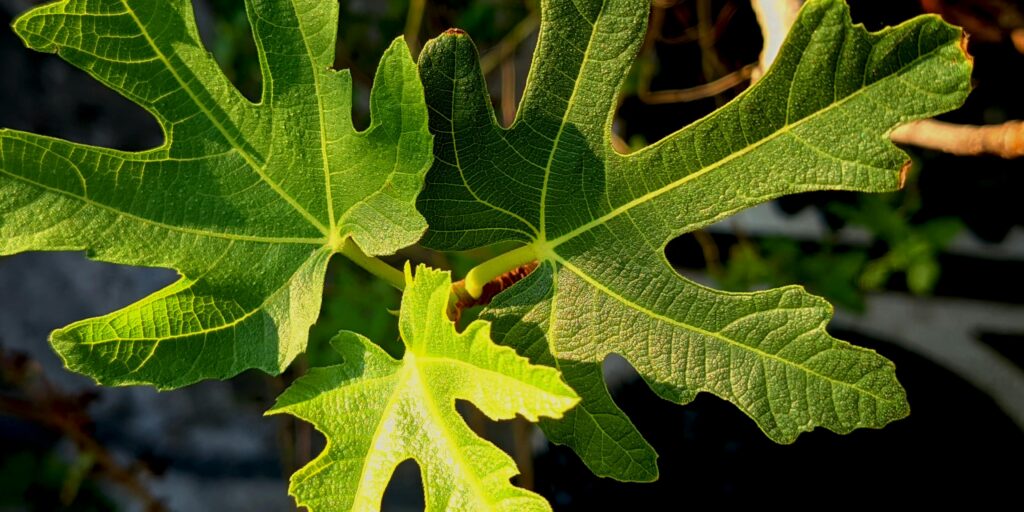
The plant produces smooth grayish branches and large hand-shaped leaves. When a leaf, fruit or branch is damaged, a white milky latex is released. This sap can irritate sensitive skin, so gloves are recommended during pruning and harvesting.
A fig is not a simple botanical fruit. It is a specialized fleshy structure containing many tiny flowers on the inside. The flowers are not visible from the outside.
Ripe figs may be green, yellow, bronze, brown, red-purple or almost black. The flesh can range from pale pink to deep red.
Flavor depends on the cultivar, sunlight, watering and ripeness. A fully mature fig is soft, sweet and aromatic, while an unripe fig remains firm and may contain irritating latex.
Does a Fig Tree Need Pollination?
Many fig cultivars sold for home gardens are parthenocarpic. They can develop fruit without pollination by the specialized fig wasp.
For cooler regions, cultivars classified as common figs are usually the best choice. They do not need a pollinator and can crop reliably where the fig wasp is absent.
Some Mediterranean types, especially Smyrna figs, require pollination. Without it, young figs may fall before ripening.
When choosing a fig tree, look for:
- self-fruiting or parthenocarpic cultivars,
- early-ripening varieties,
- proven cold tolerance,
- plants propagated from productive trees,
- cultivars tested in a similar climate,
- compact varieties for containers.
An unlabeled fig can be difficult to assess because its pollination needs, ripening time and mature size may be unknown.
How to Choose the Right Fig Cultivar
Cultivar choice strongly affects success. A fig that performs perfectly in a hot Mediterranean climate may fail to ripen in an area with a shorter summer.
Cooler regions need early cultivars with a relatively short ripening period. Varieties capable of producing an early breba crop may also be valuable.
When buying a plant, check:
- the cultivar name,
- expected ripening time,
- cold hardiness,
- mature height and spread,
- pollination requirements,
- suitability for containers,
- leaf health,
- root condition.
The stems should be firm and the potting mix should not smell rotten. Avoid plants with severely yellowed foliage or soft black roots.
A fig propagated from a cutting of a fruiting tree may crop relatively early. Seed-grown plants may not preserve the characteristics of the parent and can take longer to produce fruit.
The Best Position for a Fig Tree
A fig tree needs as much sun and warmth as possible. A site receiving at least six to eight hours of direct sunlight each day is ideal.
A south-facing or southwest-facing wall is particularly useful. Masonry absorbs heat during the day and releases it slowly at night. The wall can also protect the plant from cold wind.
A suitable site should be:
- sunny,
- warm,
- sheltered from northern winds,
- outside a frost pocket,
- well drained,
- free from standing water,
- spacious enough for the mature plant.
A fig may survive in partial shade, but the stems are often weaker and the fruit ripens later. Deep shade greatly reduces cropping.
Young shoots are vulnerable to late spring frost. Avoid low areas where cold air regularly collects.
The Best Soil for Ficus carica
Fig trees are adaptable, but they grow best in fertile, humus-rich and well-drained soil. They do not tolerate permanently waterlogged roots.
Heavy clay holds water for too long and may deprive roots of oxygen. Improving a broad planting area with mature compost and structural material is more effective than placing a small drainage layer in the bottom of the hole.
Very sandy soil dries rapidly. Compost improves its ability to retain moisture and nutrients.
Before planting, the soil can be improved with:
- mature compost,
- good garden loam,
- well-decomposed organic matter,
- material that opens heavy soil.
Do not place fresh manure directly against the roots. It may damage them and stimulate excessive soft growth.
Fig trees tolerate slightly acidic, neutral and mildly alkaline soil. Reliable drainage is usually more important than an exact pH value.
When to Plant a Fig Tree
Spring is the safest planting season in cool climates. Wait until the risk of severe frost has passed and the soil has begun to warm.
The plant then has a full growing season to establish before winter. This is especially important for young trees.
Early autumn planting may be suitable in mild regions. The soil is still warm, but the tree must have enough time to develop new roots before cold weather.
Container-grown plants can technically be planted throughout much of the growing season. Summer planting requires careful watering and temporary protection from extreme heat.
How to Plant a Fig Tree Correctly
Water the root ball thoroughly before planting. A very dry container can be soaked briefly in water.
Dig a hole wider than the root ball but not significantly deeper. The fig should be planted at approximately the same depth at which it was growing in its nursery pot.
A reliable method includes:
- removing weeds,
- loosening the surrounding soil,
- digging a broad hole,
- mixing compost with the original soil,
- removing the fig from its container,
- loosening tightly circling roots,
- positioning the root ball,
- checking planting depth,
- backfilling with soil,
- firming gently,
- watering deeply,
- applying mulch.
Keep mulch away from direct contact with the trunk. Constant moisture against the bark may encourage decay.
When planting beside a wall, leave enough space for air circulation, future pruning and access to the root zone.
Watering a Fig Tree
A newly planted fig needs regular watering while it establishes. The soil should remain moderately moist but never permanently saturated.
A mature fig can tolerate short dry periods, but prolonged drought may cause:
- slower growth,
- leaf drop,
- fruit drop,
- smaller figs,
- dry flesh,
- delayed ripening.
Consistent moisture is especially important while fruit is forming and ripening. Severe drying followed by heavy rain or irrigation can cause fruit splitting.
Water deeply around the root zone. Frequent shallow watering encourages surface roots.
Container-grown figs require more frequent watering than plants in the ground. During hot weather, the potting mix may need to be checked every day.
Feeding a Fig Tree
Figs do not need excessive fertilizer. Too much nitrogen encourages long, leafy shoots that remain soft and are more vulnerable to frost.
A layer of mature compost can be applied in spring. In poor soil, use a balanced fertilizer intended for fruiting plants.
A fertilizer containing an appropriate level of potassium may support fruit ripening and stronger tissue.
Important feeding rules include:
- do not fertilize completely dry soil,
- do not exceed the recommended dose,
- reduce nitrogen by late summer,
- do not feed a waterlogged plant heavily,
- keep concentrated fertilizer away from the trunk.
Container figs need more regular feeding because nutrients are gradually washed from the potting mix. Use moderate doses during active growth.
When to Prune a Fig Tree
The main pruning period is late winter or early spring after the most severe frost has passed.
In colder areas, wait until winter damage becomes visible. Dead wood is dry and brown, while living wood is green beneath the bark.
Light summer pruning can control excessively vigorous shoots. Pinching or shortening young stems may encourage branching and help the wood mature before winter.
Avoid severe autumn pruning. Fresh wounds and new growth may be damaged by cold weather.
How to Prune a Fig Tree
Figs can be grown as multi-stemmed shrubs or small trees. A shrub form is often more practical in cold climates because it can recover from the base after frost damage.
Remove:
- dead branches,
- frost-damaged shoots,
- broken wood,
- inward-growing branches,
- crossing stems,
- very weak growth,
- branches lying on the soil,
- diseased material.
The framework should remain open and well lit. Fruit inside a dense canopy ripens more slowly.
Use clean, sharp tools. Wear gloves because the milky latex can irritate skin.
Avoid removing large amounts of healthy one-year-old wood unnecessarily. Some cultivars carry an early breba crop on stems produced during the previous season.
Training a Young Fig Tree
Decide whether the young plant will be trained as a shrub or a tree.
For a shrub form, retain several strong shoots emerging from the base. Remove weak, crowded or badly positioned stems.
For a tree form, select one main trunk. Gradually remove lower side shoots and develop a crown at the desired height.
A shrub form is easier to:
- protect during winter,
- regenerate after frost,
- keep at a manageable height,
- harvest,
- cover with insulation.
A tree form is ornamental, but the exposed trunk and main branches are more vulnerable to cold.
When Does a Fig Tree Produce Fruit?
A cutting-grown fig may produce its first fruit while still relatively young. More reliable harvests develop after the plant has established a strong root system.
Some cultivars produce two crops. The first is called the breba crop and develops on wood formed during the previous year. The main crop develops on new shoots.
In cooler climates, breba fruit can be valuable because it may ripen earlier. If the older stems are killed by frost or removed by heavy pruning, the breba crop is lost.
The main crop may ripen late during cool summers. An early cultivar, full sun and a warm wall improve the chance of success.
Why a Fig Tree Does Not Produce Fruit
A healthy leafy fig may still fail to crop.
Common reasons include:
- the plant is too young,
- the site is too shaded,
- the cultivar requires pollination,
- shoots are damaged by frost,
- too much nitrogen is used,
- the tree is pruned too heavily,
- roots remain waterlogged,
- the plant suffers from drought,
- the growing season is too short,
- vegetative growth is excessive.
Begin by confirming the cultivar and evaluating the site. A fig in a shaded, windy position is unlikely to produce a reliable crop.
If the plant creates long leafy shoots, reduce nitrogen and avoid unnecessary hard pruning.
Why Young Figs Fall Off
Young fruit may drop because the plant is under stress.
Possible causes include:
- dry soil,
- waterlogged roots,
- sudden temperature changes,
- insufficient sunlight,
- root damage,
- pollination requirements,
- too many fruits on a young plant,
- transplant shock,
- nutrient imbalance.
A young fig may naturally shed part of its crop if it cannot support every fruit.
Check soil moisture and drainage. The root zone should not remain completely dry or constantly wet.
Protecting a Fig Tree From Frost
Cold tolerance depends on the cultivar, age, site and maturity of the wood. Roots often survive lower temperatures than young branches.
Before winter:
- stop high-nitrogen feeding,
- avoid stimulating late growth,
- mulch the root zone,
- protect the plant from cold wind,
- tie long branches together,
- wrap young plants with breathable material.
Dry leaves, straw or compost can be placed around the base. The insulating material should not remain saturated.
A small shrub can be tied and wrapped with winter fleece. In very cold areas, an airy cage filled with dry leaves can provide additional protection.
Do not wrap the plant tightly in airtight plastic. Condensation can encourage rot.
What to Do After Frost Damage
Do not prune immediately after winter. Some branches begin growing later than expected.
Lightly scratch the bark. Green tissue underneath indicates living wood. Brown, dry tissue is dead.
Cut damaged stems back to healthy wood. If the entire top is killed, the roots may still produce new shoots.
After severe frost damage:
- remove dead wood,
- wait for new growth,
- feed lightly only after growth begins,
- maintain moderate soil moisture,
- select the strongest replacement shoots,
- avoid allowing a heavy fruit load.
Recovery may take one or more seasons, but fig trees often regenerate strongly.
Growing a Fig Tree in a Container
Container growing is ideal for colder climates because the plant can be moved to a protected place during winter.
The pot must have generous drainage holes. Never allow the roots to sit in standing water.
A suitable growing medium should be:
- well drained,
- nutrient rich,
- moisture retentive without becoming saturated,
- airy,
- stable for long-term cultivation.
Do not place a small plant immediately into an enormous pot. A large volume of wet compost dries slowly and increases the risk of root rot.
Increase pot size gradually. Choose a stable container because a leafy fig canopy catches the wind.
Watering a Container Fig
A potted fig dries much more quickly than a garden plant. During hot weather, daily watering may be required.
Check the upper layer of compost. If it is dry, water thoroughly until moisture drains from the holes.
Empty any collected water from a saucer or decorative outer pot.
Irregular watering can cause:
- fruit drop,
- wilting,
- fruit splitting,
- brown leaf edges,
- slowed growth.
Maintain the most even moisture possible while figs are ripening.

Overwintering a Container Fig
Roots in a pot are more exposed to freezing because cold reaches the root ball from every side.
After the leaves fall, move the plant to a cool protected space. Suitable locations may include:
- an unheated garage,
- a cool basement,
- a sheltered corridor,
- a cold conservatory,
- a protected shed.
A dormant leafless fig does not need strong light. The root ball must not dry completely.
Water very sparingly. Cold, wet compost is one of the greatest winter risks.
In spring, reintroduce the plant to outdoor conditions gradually. Do not move it directly from a dark storage area into intense sunlight.
Repotting a Fig Tree
Young figs may need repotting every one or two years. Older plants are repotted when necessary.
Signs that a larger container is needed include:
- roots growing through drainage holes,
- potting mix drying extremely quickly,
- slowed growth,
- instability,
- water flowing around a compacted root ball.
Late winter or early spring is the best time to repot.
For a very large plant, replace the upper layer of compost and carefully prune part of the root system. Root pruning should be balanced with appropriate top pruning.
Propagating Fig Trees From Cuttings
Figs are relatively easy to propagate from cuttings. This method preserves the characteristics of the cultivar.
Hardwood cuttings can be taken during dormancy. Semi-ripe shoots can also be used during the growing season.
A cutting should contain several buds. Insert the lower section into a light, well-drained medium.
Provide:
- lightly moist compost,
- stable warmth,
- bright indirect light,
- protection from intense sun,
- gentle humidity,
- clean containers,
- regular ventilation.
Excess moisture causes cuttings to rot. Once roots have formed, move the young plant gradually into a larger pot.
Propagating by Layering
Layering is useful for an established garden fig.
Bend a flexible low branch toward the ground. Lightly wound part of the stem, pin it in place and cover it with soil. Leave the tip above ground.
Keep the area moderately moist. Once roots develop, the new plant can be separated from the parent.
The branch remains attached to the parent while rooting, giving it a reliable water supply.
Common Fig Tree Pests
Fig trees are generally robust, but they may be attacked by:
- aphids,
- scale insects,
- mealybugs,
- spider mites,
- whiteflies,
- thrips,
- slugs on young plants.
Aphids distort young growth. Scale and mealybugs produce sticky honeydew. Spider mites create pale speckling and fine webbing.
Inspect container plants carefully before moving them into winter storage. Protected indoor conditions can allow pests to multiply quickly.
A light infestation can often be washed away or removed manually. Severe problems require a product labeled for the identified pest.
Fig Tree Diseases
Root rot caused by waterlogging is one of the most serious problems. The plant wilts and yellows even though the soil remains wet.
Leaf spots may develop in humid, poorly ventilated conditions. Fig rust produces yellow to brown spots and powdery growth on the lower surface of leaves.
Preventive measures include:
- full sun,
- good air circulation,
- watering at the roots,
- removal of infected leaves,
- clean tools,
- well-drained soil,
- balanced feeding,
- an open canopy.
Do not leave diseased fallen leaves beneath the plant.
Why Fig Leaves Turn Yellow
One or two yellow lower leaves may be aging naturally. Widespread yellowing during the growing season suggests stress.
Possible causes include:
- overwatering,
- prolonged drought,
- root damage,
- nutrient deficiency,
- transplant shock,
- cold wind,
- spider mites,
- leaf disease,
- an undersized pot.
Check soil moisture first. If the soil is wet and the plant is wilting, the roots may be damaged.
Yellow tissue between green veins may indicate a nutrient availability or pH problem.
Why Figs Split
Fruit splitting is most often caused by irregular watering. After prolonged drought, the plant absorbs a large amount of water and the skin cannot expand quickly enough.
Splitting may also be encouraged by:
- heavy rain during ripening,
- high humidity,
- overripe fruit,
- a thin-skinned cultivar,
- insect damage,
- sudden cooling.
Maintain even soil moisture and harvest ripe figs promptly. Split fruit spoils quickly and attracts wasps.
When and How to Harvest Figs
Figs do not ripen significantly after they are picked. Harvest only fully ripe fruit.
A ripe fig:
- feels soft,
- hangs slightly downward,
- has the mature color of the cultivar,
- smells sweet,
- separates easily,
- may show a drop of syrup at the opening.
Unripe figs remain hard and contain more irritating latex.
Pick carefully because the skin bruises easily. Wear gloves if your skin is sensitive.
Fresh figs have a short storage life and are best eaten soon after harvest.
Storing and Using Figs
Fresh figs can be stored in the refrigerator for a few days. Place them in a single layer to prevent bruising.
Figs can be:
- eaten fresh,
- dried,
- preserved,
- made into jam,
- baked,
- added to salads,
- served with cheese,
- frozen for later processing.
Use only healthy fully ripe fruit for drying or preserving.
Is a Fig Tree Poisonous?
Ripe figs are edible. The white latex in leaves, stems and unripe fruit can irritate skin and eyes.
It may cause:
- redness,
- itching,
- skin inflammation,
- increased sensitivity to sunlight,
- eye irritation.
Wear gloves and long sleeves during pruning. Wash exposed skin after handling the plant.
Children and pets should not chew leaves or branches. Seek medical or veterinary advice if a significant reaction or ingestion occurs.
Companion Plants for a Fig Tree
A fig tree combines well with plants that enjoy sun and well-drained soil.
Suitable companions include:
- lavender,
- sage,
- thyme,
- oregano,
- Russian sage,
- sedum,
- coneflowers,
- ornamental grasses,
- yarrow,
- spring bulbs.
Do not crowd the trunk with small plants. Leave access for watering, mulching and inspection.
A Seasonal Fig Tree Care Calendar
In spring, remove winter protection gradually. Check for frost damage and prune dead wood after buds begin to swell. Add compost and repot container plants if necessary.
In late spring, monitor watering and protect tender growth from late frost. Acclimate stored container plants gradually to outdoor sun.
During summer, water regularly, inspect for pests and guide overly long shoots. Maintain even moisture while fruit is ripening.
By late summer, stop using high-nitrogen fertilizer. The wood needs time to mature before winter.
In autumn, harvest ripe fruit, remove diseased leaves and prepare winter protection. Avoid hard pruning.
After leaf fall, mulch garden figs and move container plants to a protected place.
During winter, check stored figs occasionally. Water only enough to prevent the root ball from drying completely.
Frequently Asked Questions About Fig Trees
How Fast Does a Fig Tree Grow?
In warm, sunny conditions, growth can be rapid. New shoots may extend by several dozen centimeters or more than a meter in one season.
When Does a Fig Tree Start Fruiting?
A cutting-grown plant may produce its first figs while young. A larger harvest develops after the root system becomes established.
Does a Fig Tree Need a Second Plant?
Most common fig cultivars do not need another plant. Always confirm the pollination requirements of the chosen variety.
Can a Fig Tree Grow in Partial Shade?
It can survive, but fruiting is reduced and ripening is delayed. Full sun provides the best results.
How Often Should a Fig Tree Be Watered?
Water according to weather, soil and container size. The soil can dry slightly between waterings, but should not remain completely dry while fruit is developing.
Should a Fig Tree Be Pruned Every Year?
Hard annual pruning is unnecessary. Remove dead, damaged and poorly positioned branches. Excessive pruning can reduce the early crop.
Why Has My Fig Tree Not Grown After Winter?
The stems may be frost damaged, or the plant may begin growth later than expected. Check for green tissue beneath the bark before pruning.
Can a Fig Tree Stay in a Pot Permanently?
Yes. It requires regular watering, feeding, repotting and protection of the root ball during winter.
Why Do My Figs Fail to Ripen?
Possible causes include a late cultivar, insufficient sun, a cool summer, excessive leafy growth, lack of water or fruit developing too late in the season.
Should Small Autumn Figs Be Removed?
Small fruit with no chance of ripening can be removed. Keep only fruit that may form a viable overwintering breba crop.
Discover more plant-related articles and tips on our blog HERE.
Don’t forget to follow us on social media so you don’t miss any important news and updates HERE.