
Choosing the right soil is one of the most important decisions in houseplant care. Light, watering and fertilising all matter, but the root system depends on the substrate every single day. It is where roots breathe, absorb water, take up nutrients and anchor the whole plant.
Many plant problems begin below the surface. Yellowing leaves, slow growth, drooping stems, mould, fungus gnats and root rot are often connected to the condition of the soil. A plant may receive enough light and careful watering, but if the substrate is too dense, too wet or poorly matched to the plant, the roots will still struggle.
Good houseplant soil is not just something that fills the pot. It is a growing environment. It should support the plant physically, hold enough moisture, allow excess water to drain away and keep oxygen available around the roots.
This is why PlantNest substrates are designed around the needs of real indoor plants. Instead of using one heavy mix for every species, PlantNest focuses on airy structure, balanced moisture, fast drainage and strong root support. The right mix makes watering easier, reduces stress below the surface and helps plants grow with more stability.
This guide answers the most common questions about houseplant soil, substrate ingredients, drainage, repotting, plant-specific mixes and root health.

What is the best soil for houseplants?
The best soil for houseplants is airy, well-draining and matched to the plant’s natural needs. It should hold enough moisture to keep the roots hydrated, but it should not stay wet for too long.
A good substrate also needs structure. If the mix becomes compacted after watering, roots receive less oxygen. This can slow growth and increase the risk of root problems.
For many indoor plants, a balanced mix contains a base substrate together with structural ingredients such as pine bark, perlite, pumice, expanded clay or zeolite. These components help create air spaces, improve water movement and support healthier root growth.
There is no single perfect soil for every plant. A Monstera needs a different structure from a cactus. A Calathea needs different moisture behaviour from a succulent. The best soil is the one that supports the specific plant in the pot.
Why is regular potting soil often not enough?
Regular potting soil can be too dense for many modern houseplants. It may hold too much water, compact over time and reduce airflow around the roots.
This is especially risky indoors because plants grow in a limited pot environment. In nature, water moves through layers of organic material, bark, stones and soil. In a pot, everything depends on the substrate and drainage holes.
When regular soil stays wet too long, the roots can become weak. The plant may show yellow leaves, slow growth or drooping even though the soil feels moist.
A higher-quality substrate helps prevent this by keeping the mix more open and breathable. It allows water to move through the pot while still holding the moisture the plant needs.
What is the difference between soil and substrate?
In everyday plant care, people often use the words soil, potting mix and substrate in the same way. However, substrate is a broader term. It means the growing medium used to support the plant.
A houseplant substrate does not have to be garden soil. In fact, most indoor plants grow better in a carefully prepared mix made from different components. These may include organic materials, mineral particles, bark, perlite, pumice, expanded clay or other soil improvers.
The purpose of substrate is not only to feed the plant. It should create the right balance of moisture, oxygen, structure and support.
This is why PlantNest uses plant-specific substrate blends rather than relying on one generic soil for every plant.
Can I use garden soil for indoor plants?
Garden soil is not ideal for most indoor plants in pots. It is usually too heavy and too compact for container growing. It may also contain pests, weed seeds, fungi or other organisms that are not suitable for indoor plant care.
In the garden, soil is part of a much larger ecosystem. Water can drain deeper into the ground, worms and microorganisms constantly move through it, and roots have more space to spread. A pot is completely different. It has limited volume, limited drainage and less airflow.
When garden soil is placed in a pot, it can become dense and waterlogged. Roots may struggle to breathe and the plant can decline.
For indoor plants, it is better to use a potting substrate designed specifically for container growing.
What does airy soil mean?
Airy soil means the substrate contains enough open spaces for oxygen to reach the roots. These air spaces are essential because roots need oxygen to function properly.
When soil is airy, water can drain more evenly and roots can grow through the mix more easily. The substrate does not collapse into a dense mass after watering.
Airy soil often contains ingredients such as pine bark, perlite, pumice or expanded clay. These materials create structure and help prevent compaction.
For tropical plants such as Monsteras, Philodendrons, Anthuriums and Alocasias, airy soil is especially important. Their roots need moisture, but they also need oxygen and movement through the substrate.
Why do roots need oxygen?
Roots are living tissue. They absorb water and nutrients, but they also need oxygen for respiration. If the substrate stays saturated with water, oxygen is pushed out of the spaces between soil particles.
Without enough oxygen, roots weaken. Weak roots cannot absorb water properly, even if the soil is wet. This is why a plant with root problems can look thirsty while sitting in damp substrate.
A well-structured substrate helps prevent this. It keeps air available around the roots while still holding the moisture needed for growth.
Healthy roots are the foundation of healthy leaves. When the root system is strong, the whole plant becomes more resilient.
How do I know if my soil is too dense?
Soil is often too dense if water sits on the surface before soaking in. It may also feel heavy, sticky or muddy after watering.
Another sign is slow drying. If the substrate stays wet for many days and the plant is not using the moisture, the mix may be holding too much water.
Compacted soil can also pull away from the sides of the pot, become hard on top or form channels where water runs through unevenly.
Plant symptoms can also give clues. Slow growth, yellowing leaves, drooping, fungus gnats or root rot may all be connected to dense soil.
If the soil feels compacted, it may be time to repot into a fresher, airier mix.
How can I make soil more airy?
Soil can be made more airy by adding structural ingredients that improve drainage and create space inside the mix.
Perlite is one of the most common soil improvers. It is lightweight and helps loosen heavy substrates. It improves oxygen circulation and reduces compaction.
Pine bark adds chunkiness and structure. It is especially useful for aroids and other tropical plants that enjoy a breathable root zone.
Pumice provides stable mineral structure. It improves aeration while also helping with moisture and nutrient balance.
Expanded clay helps water move through the mix and supports airflow around the roots.
Zeolite can help regulate moisture and nutrient availability while supporting a more balanced root environment.
The goal is not to make every mix extremely dry. The goal is to match airiness and water retention to the plant’s needs.
What does well-draining soil mean?
Well-draining soil allows excess water to move through the pot instead of staying trapped around the roots. After watering, the substrate should become evenly moist, but it should not remain soggy for too long.
Good drainage depends on both the substrate and the pot. Even the best substrate cannot work properly if the pot has no drainage holes.
A well-draining mix usually contains ingredients that create structure, such as bark, perlite, pumice, sand or expanded clay. These materials help water move through the substrate more easily.
For many houseplants, well-draining soil makes watering easier and reduces the risk of root rot.
Does well-draining soil dry out too quickly?
Not always. Well-draining does not mean dry or poor-quality. A good substrate can drain excess water while still holding enough moisture for the roots.
This balance is very important. A mix that dries too quickly can stress moisture-loving plants. A mix that stays wet too long can suffocate roots.
PlantNest substrates are designed around this balance. They support fast drainage, but also aim to keep moisture available in a controlled way. This helps create a more predictable watering routine.
The right drying speed depends on the plant. A cactus needs the mix to dry much faster than a Calathea. An aroid usually needs a combination of airflow and light moisture.
Why is my soil staying wet for too long?
Soil may stay wet too long because the mix is too dense, the pot is too large, the room is too cold, the plant receives too little light or the pot has poor drainage.
Low light is a common reason. Plants use water more slowly when they receive less light. If watering continues at the same frequency, the substrate stays wet for longer.
Pot size also matters. A small root system in a large pot cannot absorb moisture from all the surrounding substrate quickly enough. The extra soil stays wet and increases the risk of root problems.
Dense soil makes the problem worse because water cannot move through it efficiently.
If your soil stays wet for many days, check the pot, light conditions, watering routine and substrate structure.
Why does my soil dry out too quickly?
Soil can dry too quickly if the pot is too small, the plant is root-bound, the room is warm, the plant receives strong light or the substrate is too loose for that plant.
A root-bound plant often dries quickly because the pot contains more roots than substrate. There is not enough growing medium left to hold moisture.
Terracotta pots can also dry faster because they are porous. This can be useful for succulents and cacti, but it may be too drying for tropical plants.
If the substrate dries too quickly and the plant wilts often, it may need repotting, a slightly larger pot or a mix with better moisture balance.
How often should houseplant soil be changed?
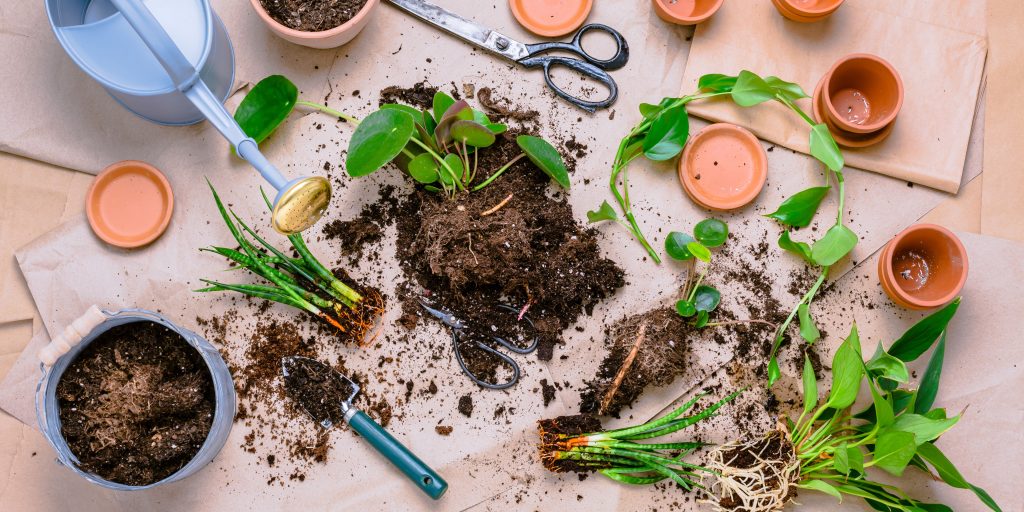
Most houseplants benefit from fresh substrate every 12 to 18 months, but this depends on the plant, growth speed and condition of the mix.
Soil should be changed sooner if it becomes compacted, smells bad, develops persistent mould, attracts pests or stays wet for too long.
Repotting is also useful when roots grow through drainage holes, circle tightly around the pot or push the plant upward.
Fresh substrate gives the roots a cleaner and more balanced environment. It restores structure, improves drainage and gives the plant more space to grow.

Can I reuse old potting soil?
Old potting soil can sometimes be reused, but it should be checked carefully first. If it smells sour, contains pests, has mould problems or was used for a plant with root rot, it is better not to reuse it.
If the old soil is still clean, it can be refreshed. Remove dead roots and compacted pieces. Add new structural ingredients such as perlite, pine bark or pumice to improve aeration.
However, reused soil is rarely as reliable as a fresh, balanced substrate. For sensitive plants, cuttings or plants recovering from stress, fresh substrate is usually the safer choice.
What are the signs of bad soil?
Bad soil often smells unpleasant. A sour, rotten or swamp-like smell can indicate that the mix has stayed too wet and oxygen-poor.
Compaction is another warning sign. If the substrate feels hard, heavy or muddy, roots may not be getting enough air.
Visible mould, algae, fungus gnats or pests can also suggest that the environment is too moist or poorly ventilated.
Plant symptoms matter too. If growth is slow, leaves yellow often or the plant keeps drooping despite proper care, the soil may be part of the problem.
Good soil should smell natural, feel structured and allow water to move through without becoming soggy.
Why does soil smell bad?
A bad smell often comes from excess moisture and poor airflow inside the pot. When organic material breaks down in wet, oxygen-poor conditions, the substrate can develop a sour or rotten smell.
This is usually a sign that the root zone is unhealthy. Check whether the pot has drainage holes, whether water is collecting in a cover pot and whether the substrate is too dense.
If the smell is strong and the plant is declining, remove the plant from the pot and inspect the roots. Rotten roots should be trimmed away and the plant should be repotted into fresh, airy substrate.
Why is my soil turning white?
A white surface on soil can have different causes. If it is dry, crusty and powdery, it is often mineral or salt buildup from tap water or fertiliser.
If it is soft, fluffy or fuzzy, it may be mould. Mould usually appears when the top layer stays damp for too long and airflow is poor.
Mineral buildup can be removed by scraping away the top layer or flushing the substrate with clean water. Mould requires a different approach: reduce surface moisture, improve airflow, check watering habits and consider refreshing the substrate if the problem returns.
Why does mould grow on houseplant soil?
Mould usually grows when the soil surface stays moist for too long. Poor airflow, low light, frequent watering and organic debris on the soil surface can all contribute.
A small amount of white mould is not always dangerous, but it is a sign that the pot environment needs adjustment.
Remove the visible mould, let the surface dry more between waterings and improve air circulation. If the substrate is dense or smells unpleasant, repotting may be necessary.
A breathable, well-draining substrate helps reduce the conditions that allow mould to spread.
How can I prevent fungus gnats in soil?
Fungus gnats are attracted to moist organic matter, especially in the top layer of the substrate. They often appear when soil stays too wet for too long.
Letting the top layer dry between waterings can help reduce fungus gnat activity. Good drainage and better airflow also make the environment less attractive to them.
Avoid leaving dead leaves on the soil surface. Check decorative pots for standing water. If the infestation continues, yellow sticky traps and biological treatments can help, but the watering routine and substrate condition should also be corrected.
Fungus gnats are often a symptom of moisture imbalance, not just a pest problem.
What soil is best for aroids?
Aroids such as Monstera, Philodendron, Anthurium, Alocasia, Syngonium and Epipremnum usually prefer a chunky, airy and well-draining substrate.
These plants need oxygen around the roots. Many of them naturally grow in loose organic matter, around trees or in rainforest environments where water moves freely through the root zone.
A good aroid mix often contains pine bark for structure, perlite for drainage, and mineral components such as pumice, expanded clay or zeolite for stability and airflow.
PlantNest Aroid Soil Mix is designed for tropical aroids that need balanced moisture, strong aeration and protection from waterlogged conditions.
What soil is best for Monstera and Philodendron?
Monstera and Philodendron plants grow best in a structured substrate that supports strong roots and allows oxygen to move through the pot.
They should not be planted in dense soil that stays wet for too long. Their roots appreciate a mix with chunky components and good drainage.
A suitable mix may include pine bark, perlite, pumice and zeolite. These ingredients help create a stable, breathable environment.
PlantNest Monstera & Philodendron Soil Mix is developed for this type of plant. It supports drainage, aeration and long-term root structure, which is important for plants with large leaves and active root systems.
What soil is best for Anthurium and Alocasia?
Anthurium and Alocasia plants need moisture, but they are sensitive to wet and compacted soil. Their substrate should stay lightly moisture-balanced while allowing excess water to drain away.
This balance can be difficult with regular potting soil. If the mix is too dense, the roots may suffer. If the mix dries too quickly, the plant may become stressed.
A breathable tropical mix with pine bark, perlite and expanded clay helps create better conditions. It allows oxygen to reach the roots while maintaining enough moisture for healthy growth.
PlantNest Anthurium & Alocasia Soil Mix is made for this balance.
What soil is best for Calathea and Maranta?
Calatheas and Marantas prefer a substrate that holds moisture more consistently than a cactus mix, but still remains breathable.
These plants can react badly to drying out completely. Their leaves may curl, crisp or lose their appearance when moisture is unstable. However, they also dislike heavy wet soil.
The best substrate for these plants balances moisture retention with aeration. It should not become compacted or waterlogged.
A good Calathea and Maranta mix supports stable moisture around the roots while still allowing air to move through the substrate.
What soil is best for cacti and succulents?
Cacti and succulents need fast-draining soil. They are adapted to drier environments and are very sensitive to roots staying wet for too long.
Regular potting soil usually holds too much moisture for these plants. A cactus and succulent substrate should be more mineral, lighter and faster-drying.
Ingredients such as sand, perlite and expanded clay help water move through the pot quickly. This reduces the risk of root rot and supports a healthier dry-wet cycle.
PlantNest Cacti & Succulent Soil Mix is designed for drought-tolerant plants that need a breathable, fast-draining root environment.
Can I use cactus soil for other houseplants?
Cactus soil is usually not ideal for most tropical houseplants. It may dry too quickly and may not hold enough moisture for plants such as Calatheas, Marantas, Anthuriums or many common foliage plants.
It can sometimes be mixed with other ingredients to improve drainage, but on its own it is usually best for plants that prefer dry, fast-draining conditions.
Using the wrong soil can create stress. A plant that needs consistent moisture may struggle in a substrate designed for desert plants.
Can I use the same soil for all my plants?
One soil can be used for some mixed houseplant collections, but it is rarely ideal for every plant.
Different plants have different root systems and moisture needs. A succulent, a Monstera and a Calathea should not all be treated exactly the same.
A universal mix can be useful for many common indoor plants, but more demanding species often perform better in plant-specific substrates.
PlantNest Universal Soil Mix is suitable for many everyday houseplants, while specialised mixes are better for aroids, tropical foliage plants, cacti, succulents, orchids and other plants with specific needs.
What does chunky soil mean?
Chunky soil means the substrate contains larger particles that create structure and air spaces. These particles may include pine bark, pumice, expanded clay or large perlite pieces.
Chunky soil is especially useful for plants that need airflow around their roots. It helps prevent compaction and allows water to drain more freely.
A chunky mix should still hold some moisture if the plant needs it. The goal is not to create an empty, dry mix. The goal is to keep the substrate breathable and stable.
For aroids and many tropical plants, chunky soil can make a major difference in root health.
Should I add perlite to my soil?
Perlite is useful when soil is too heavy, compacted or slow-draining. It helps improve aeration, drainage and oxygen circulation around the roots.
It is especially helpful for houseplants that dislike soggy soil. It can also be used for propagation, rooting cuttings and improving older mixes.
However, perlite should be used with purpose. Adding too much to a moisture-loving plant mix may make the substrate dry too quickly.
PlantNest Perlite can be used to loosen heavy soils, improve drainage and support healthier root development.
Is pumice better than perlite?
Pumice and perlite both improve aeration and drainage, but they behave differently.
Perlite is lighter and often more affordable. It creates air spaces and helps loosen the substrate.
Pumice is heavier and more stable. It does not float to the surface as easily and can provide longer-lasting structure.
Both can be useful. The best choice depends on the plant, the mix and the desired texture. Many high-quality substrates use more than one structural ingredient to create a balanced result.
What is expanded clay used for?
Expanded clay is a lightweight, porous material used to improve drainage, aeration and structure. It can be mixed into substrates or used in semi-hydro systems depending on the plant care method.
In soil mixes, expanded clay helps water move through the pot and supports airflow around the roots.
It can also help maintain a more stable structure over time. This is useful for plants that dislike compacted soil.
However, expanded clay at the bottom of a pot should not be treated as a replacement for drainage holes. Excess water still needs a way to leave the pot.
What role does pine bark play in soil?
Pine bark adds structure and chunkiness to the substrate. It helps prevent the mix from becoming too dense and supports air movement around the roots.
It is especially useful for aroids, orchids and tropical plants that naturally grow in loose organic environments.
Pine bark also gives roots something to grow around and helps create a more natural texture inside the pot.
In PlantNest substrates, pine bark is used as a structural component to support drainage, aeration and root development.
What is zeolite used for in plant soil?
Zeolite is a mineral component that can help regulate moisture and nutrient availability. It is often used to support a more stable root environment.
In a substrate, zeolite can help with nutrient retention and moisture balance while also contributing to structure.
It is particularly useful in mixes designed for plants that need both drainage and controlled moisture.
When combined with ingredients such as pine bark, perlite and pumice, zeolite helps create a more balanced growing medium.
Does houseplant soil contain nutrients?
Many potting mixes contain some nutrients, but the amount and duration vary. Fresh substrate often supports growth for a period after repotting, but nutrients are gradually used by the plant and washed out through watering.
Fertilising may still be needed over time, especially during the active growing season.
However, nutrients alone do not make soil good. A nutrient-rich but dense soil can still cause root problems. Structure, drainage and aeration are just as important.
Healthy roots can absorb nutrients more effectively when the substrate supports oxygen and moisture balance.
Should I fertilise after repotting?
It is usually best to wait a short period after repotting before fertilising, especially if the plant was stressed or had root damage.
Fresh substrate may already contain nutrients, and disturbed roots can be more sensitive. Fertilising too soon may increase stress rather than help growth.
After the plant begins to settle and shows signs of recovery or new growth, gentle fertilising can be introduced according to the plant’s needs.
The priority after repotting is root establishment. Airy substrate, proper watering and suitable light are more important than immediate feeding.
How do I store unused substrate?
Unused substrate should be stored in a clean, dry and closed container or bag. Keep it away from direct sunlight, excess moisture and pests.
If substrate becomes wet during storage, it may develop mould or an unpleasant smell. Letting it breathe and keeping it clean helps preserve quality.
Before using stored substrate, check the smell and texture. It should smell natural and feel fresh, not sour, slimy or compacted.
Do not store substrate in open bags where insects, dust or water can enter.
Does potting soil expire?
Potting soil does not expire in the same way as food, but it can degrade over time. Its structure can break down, nutrients can become less effective and moisture behaviour can change.
Old substrate may become compacted, dusty or poorly draining. It may also attract pests if stored badly.
Before using older soil, check its condition. If it smells bad, contains mould or feels heavy and broken down, it is better to replace it.
For best results, use fresh, high-quality substrate for sensitive plants and important repotting projects.
What is root rot and how is it related to soil?
Root rot happens when roots begin to decay, usually because they stay in wet, oxygen-poor conditions for too long.
Soil is directly connected to root rot because it controls moisture and airflow around the roots. Dense or poorly draining soil increases the risk. A pot without drainage makes the problem even worse.
A well-draining, airy substrate helps reduce the conditions that lead to root rot. It allows excess water to leave and keeps oxygen available in the root zone.
Prevention is much easier than treatment. Choosing the right substrate is one of the best ways to protect roots.


How do I choose the right PlantNest substrate?
Choose the substrate based on the plant’s natural needs and watering behaviour.
For most common indoor plants, PlantNest Universal Soil Mix is a balanced option. It supports drainage, root aeration and regular houseplant care.
For aroids such as Monstera, Philodendron, Alocasia and Anthurium, PlantNest Aroid Soil Mix provides a chunkier, more breathable structure.
For Monsteras and Philodendrons, PlantNest Monstera & Philodendron Soil Mix offers a targeted blend for strong tropical roots and larger foliage plants.
For Anthuriums and Alocasias, PlantNest Anthurium & Alocasia Soil Mix supports stable moisture and aeration.
For Calatheas and Marantas, a moisture-balanced mix is better than a dry or gritty substrate.
For cacti and succulents, PlantNest Cacti & Succulent Soil Mix provides fast drainage and a mineral-rich structure.
The right mix makes watering easier and gives roots the conditions they need to grow properly.
Why plant-specific soil matters
Plant-specific soil matters because different plants have different root systems, moisture preferences and natural growing environments.
- Aroid roots often need airflow and chunkiness.
- Succulent roots need fast drainage and dry cycles.
- Calathea roots need stable moisture without waterlogging.
- Orchid roots need structure and oxygen.
- Universal soil can work for many plants, but specialised mixes give more precise support. They reduce guesswork and make care more predictable.
- A plant-specific substrate is especially helpful for beginners who are still learning watering habits and for collectors who want consistency across a larger plant collection.
Houseplant soil is one of the most important parts of indoor plant care. It controls what happens below the surface, where the plant’s health truly begins.
A good substrate should not only hold the plant upright. It should support root growth, allow oxygen to move through the pot, drain excess water and hold the right amount of moisture for the plant.
When soil is too dense, too wet or poorly matched to the plant, problems become more likely. Root rot, mould, fungus gnats, slow growth and yellowing leaves often begin with an unhealthy root environment.
PlantNest substrates are created to support stronger roots, healthier growth and easier watering. With fast drainage, optimal moisture balance, strong root support and carefully selected ingredients, they give houseplants a better foundation from the start.
Healthy leaves begin with healthy roots. And healthy roots begin with the right substrate.